
Cleaning robots can be worth evaluating when a team needs a repeatable process over larger arrays. Suitability depends on the module layout, row-to-row transitions, tilt, access, water availability and the operating plan.
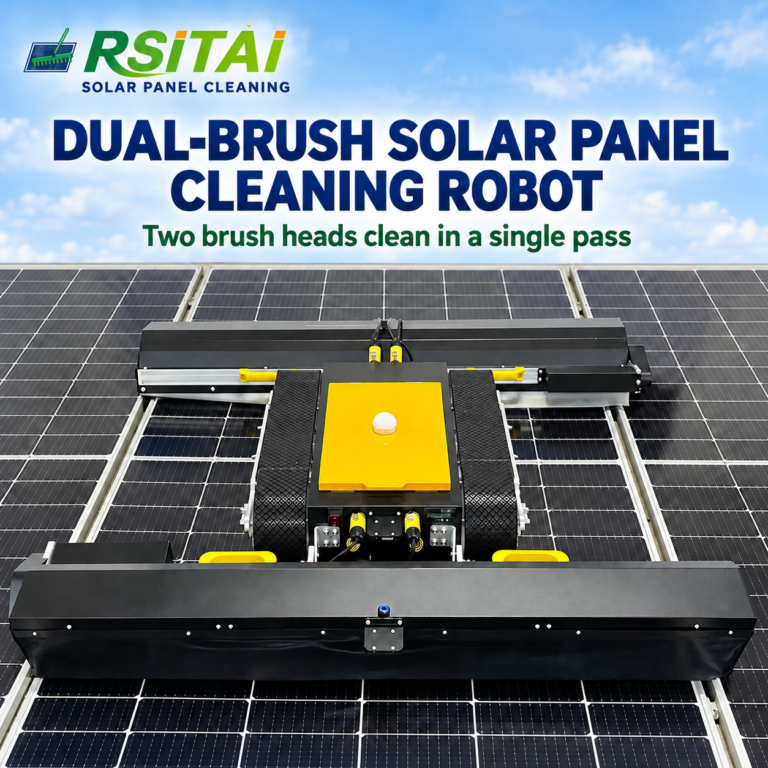
RSITAI dual-brush tracked solar panel cleaning robot with remote operation and dry or wet cleaning options.
Brush design and wet cleaning
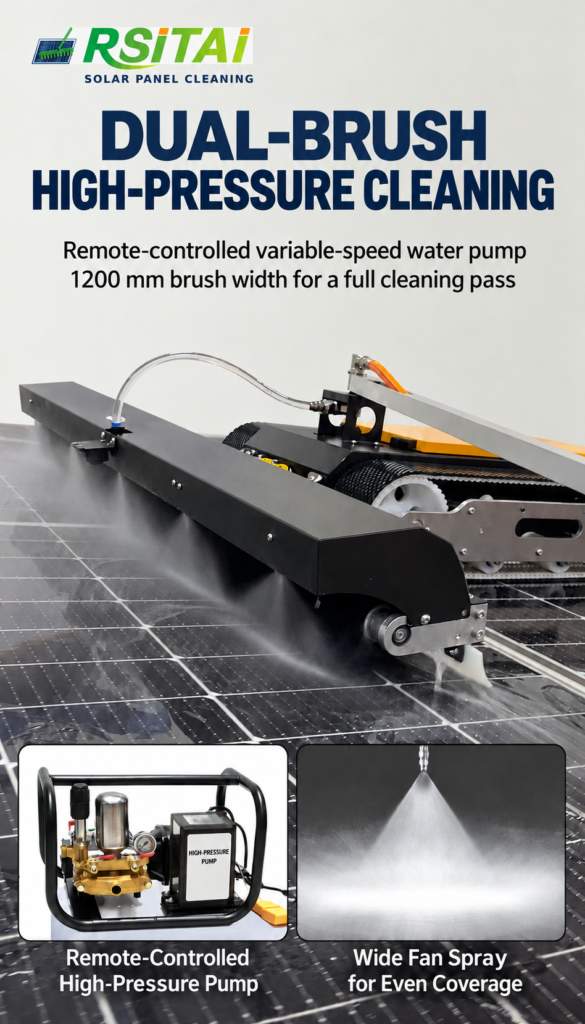
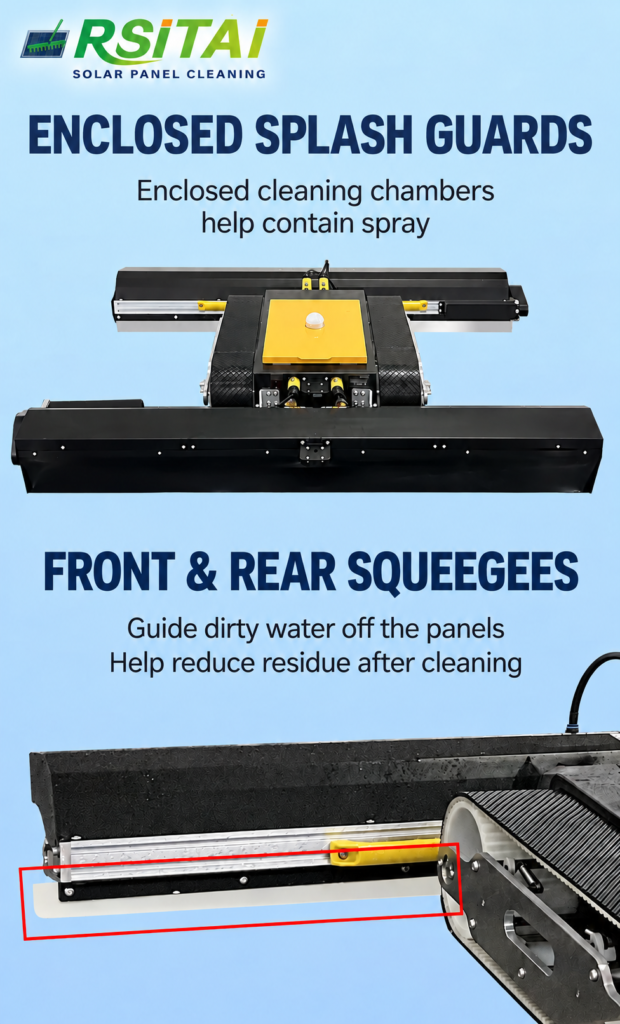
Tracked robot specifications
The supplier lists brush-width and battery configurations for this tracked robot. Compare the selected width with your panel layout, row gaps and cleaning plan. Figures for operating time and cleaning output depend on field conditions.
| Specification | Supplied technical data |
|---|---|
| Robot body size | 720 × 670 × 210 mm |
| Roller brush / cleaning width options | 1,200 / 1,300 / 1,400 mm |
| System voltage | 24 V |
| Lithium battery configurations | 29 Ah or 58 Ah × 2 (supplier sheet) |
| Indicative operating time | 10–14 hours (supplier sheet; varies by configuration and site) |
| Brush motor | 150 W |
| Travel motors | 2 × 150 W |
| Roller brush speed | 300 rpm |
| Travel speed | 0–60 m/min |
| Indicative cleaning output | 2,200–2,600 m²/h (supplier sheet; site dependent) |
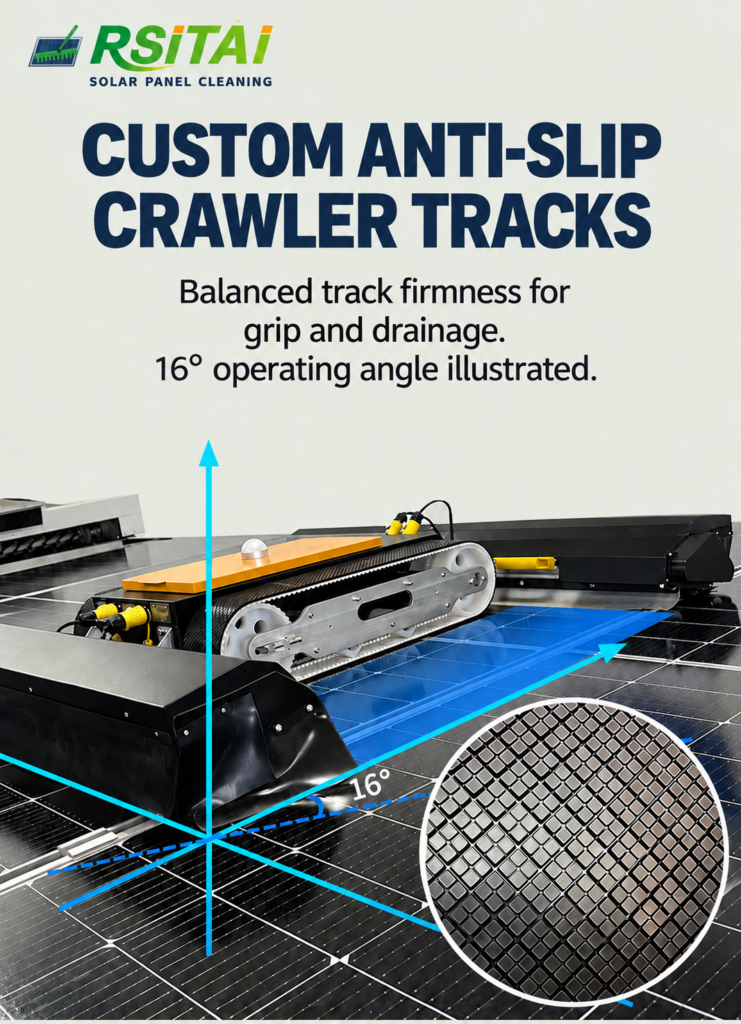
| Maximum applicable panel angle | 16° |
| Horizontal gap crossing | 400 mm |
| Remote control range | 200 m (unobstructed) |
| Operating temperature | −10 to +50 °C |
| Battery cycle figure | 1,000 deep cycles (supplier sheet) |
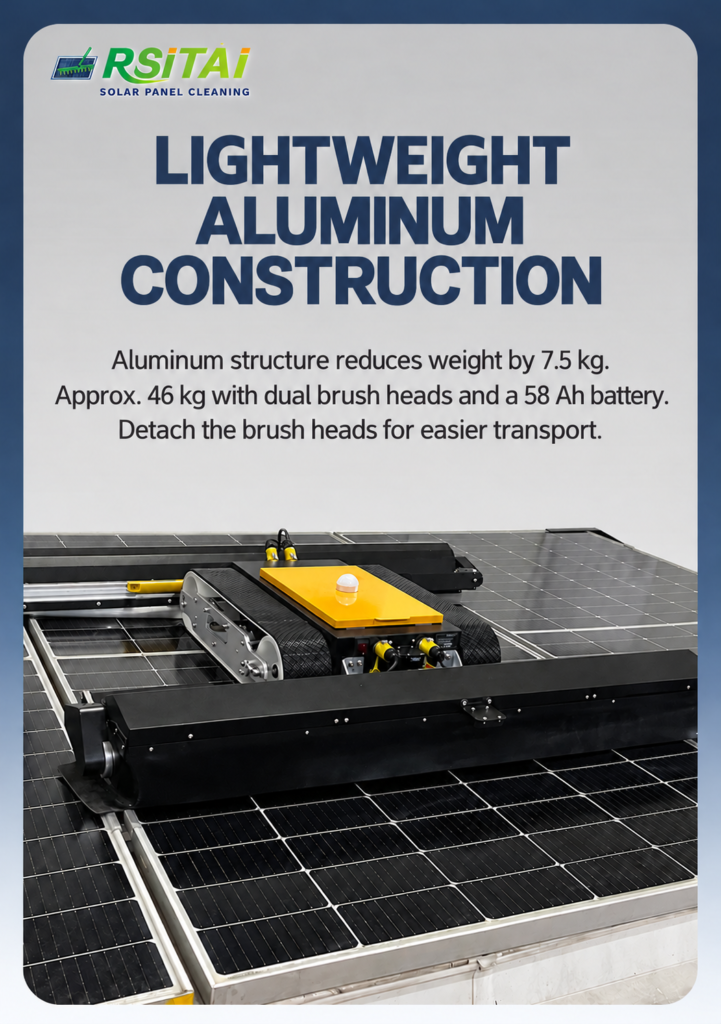
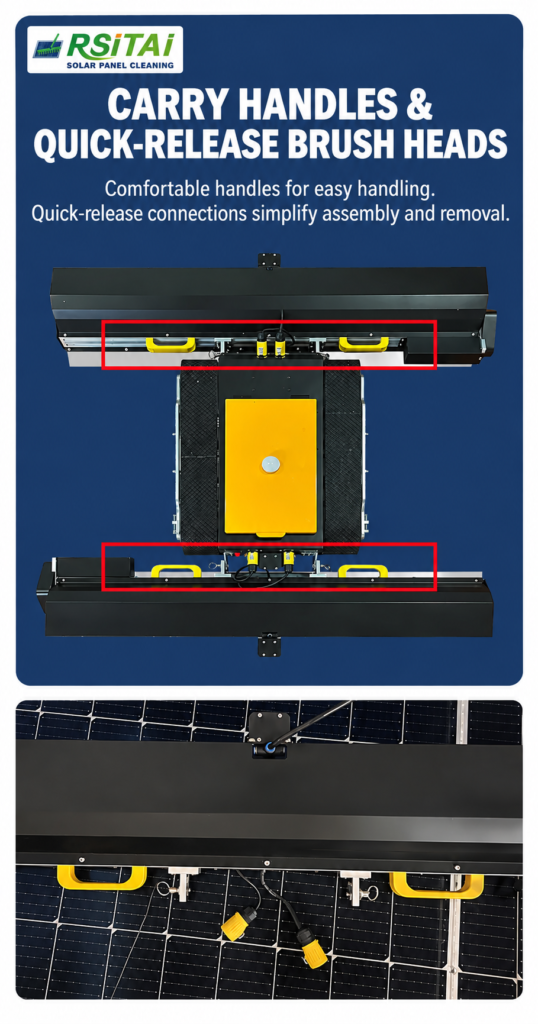
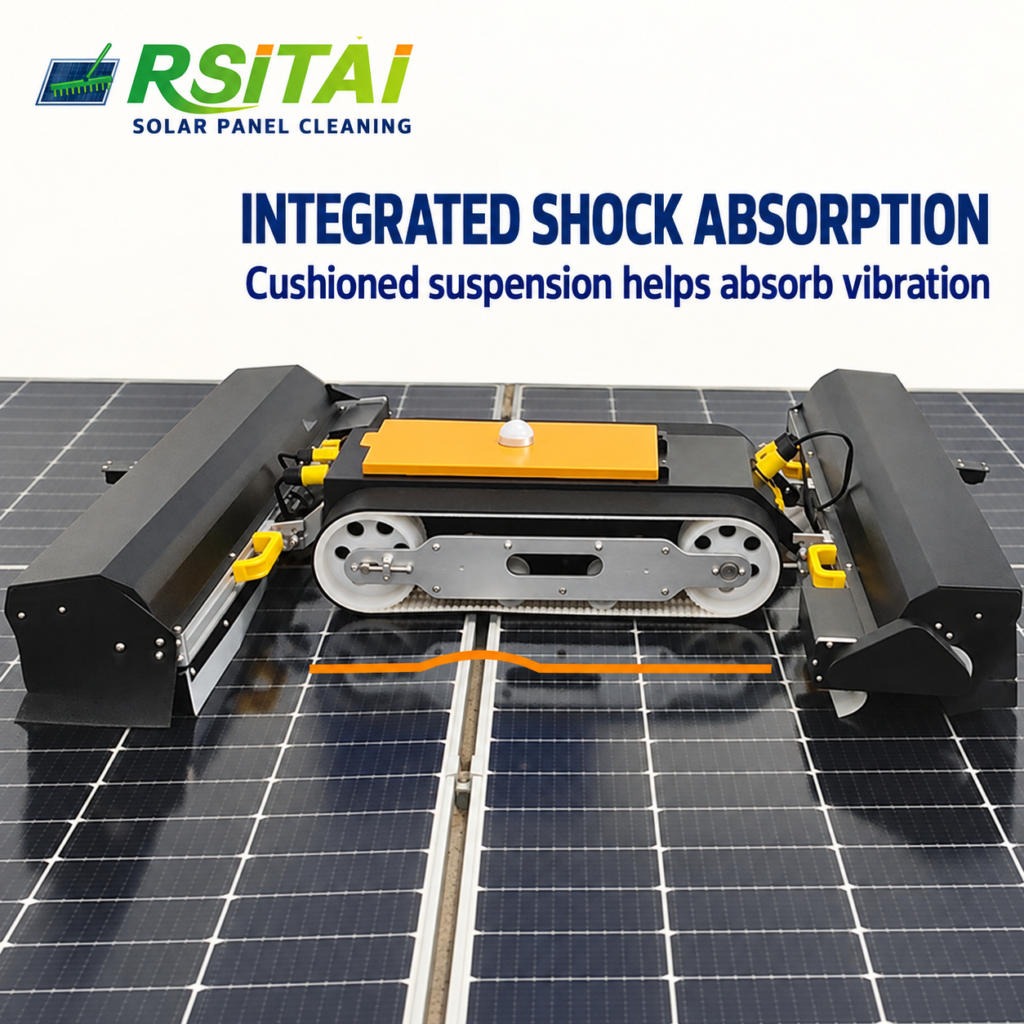
Handling and chassis design
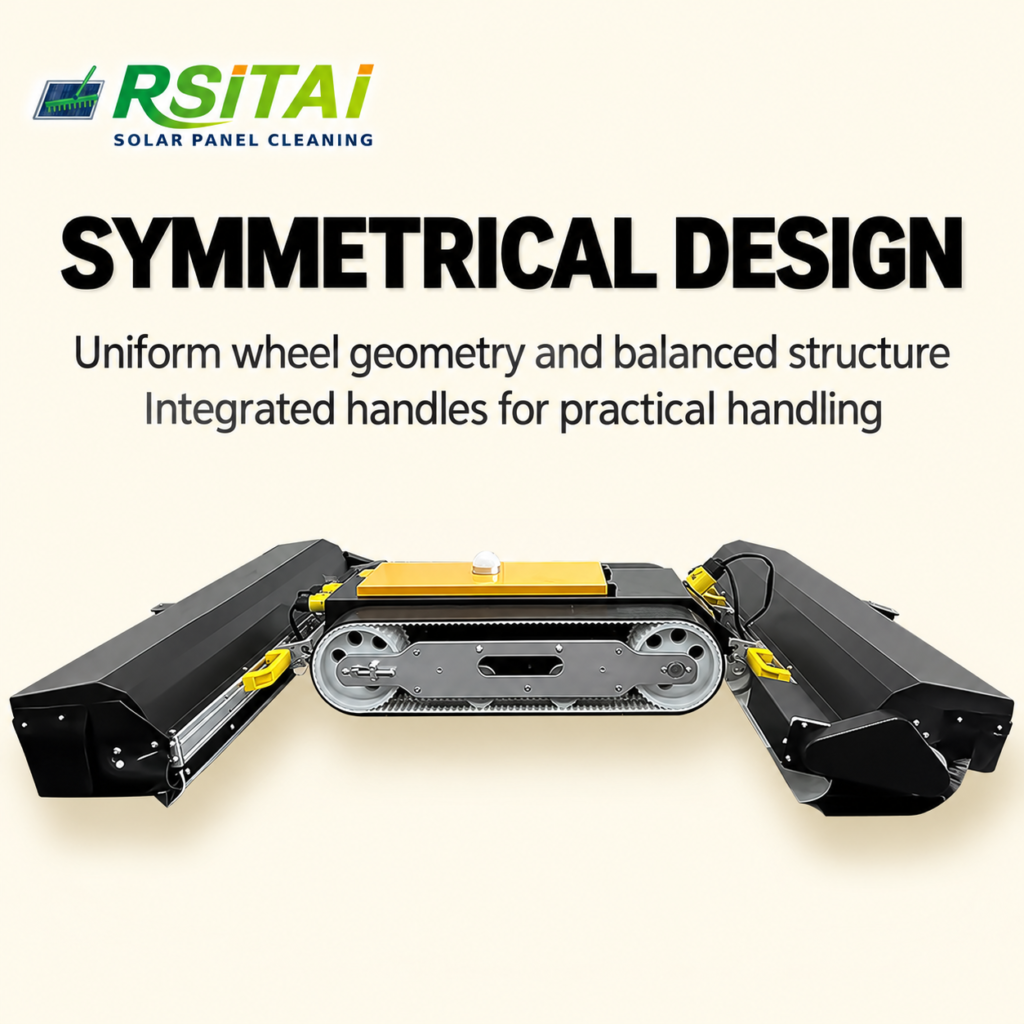
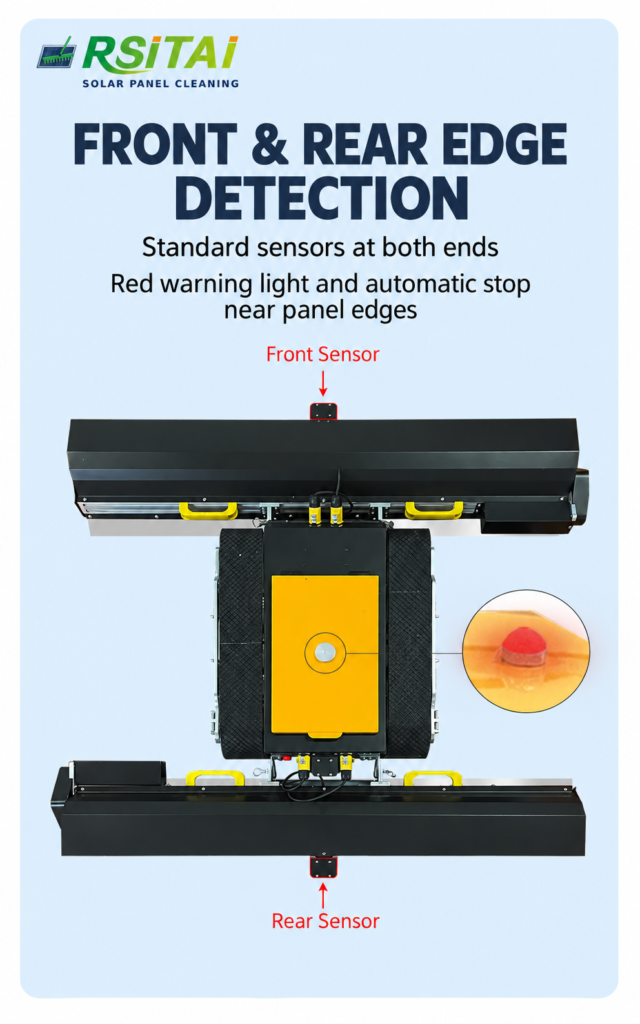
Tracks and edge detection
Battery options and power display
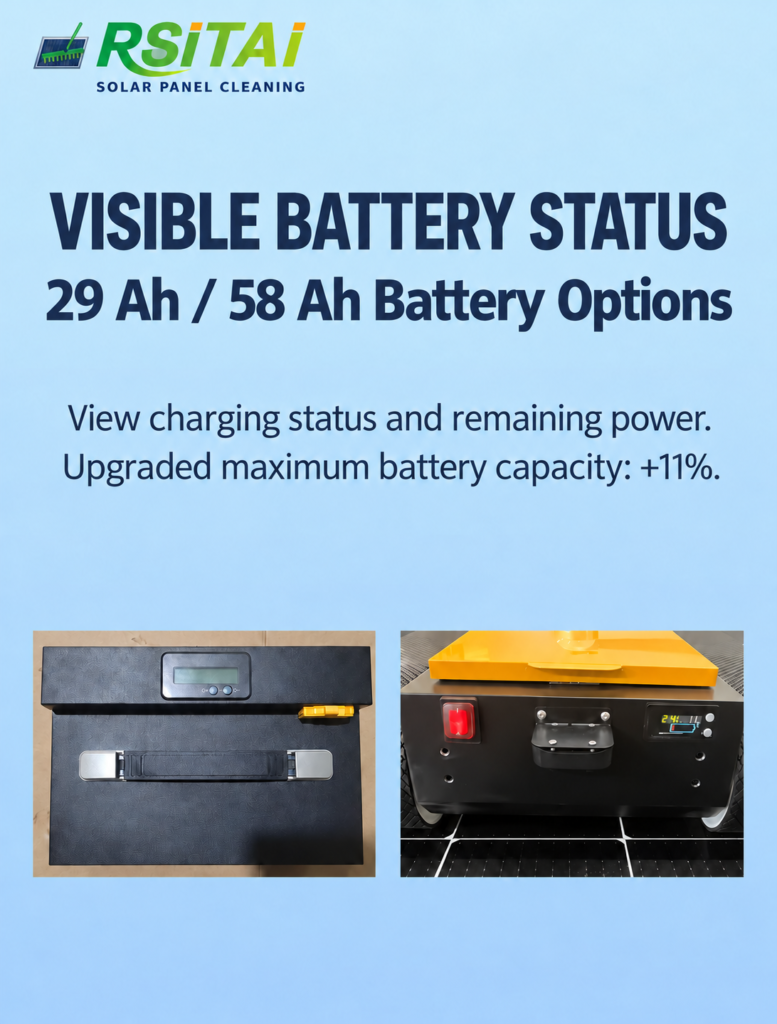
29 Ah and 58 Ah battery options are available. Confirm the selected battery configuration and included charging accessories in your quotation.
Operating and accessory options
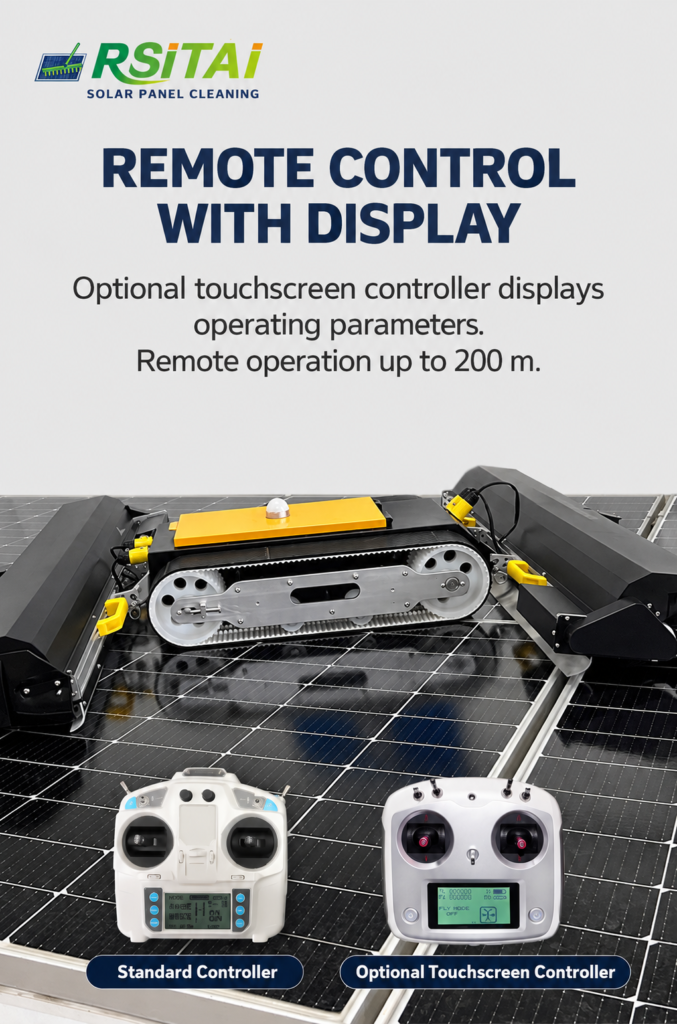
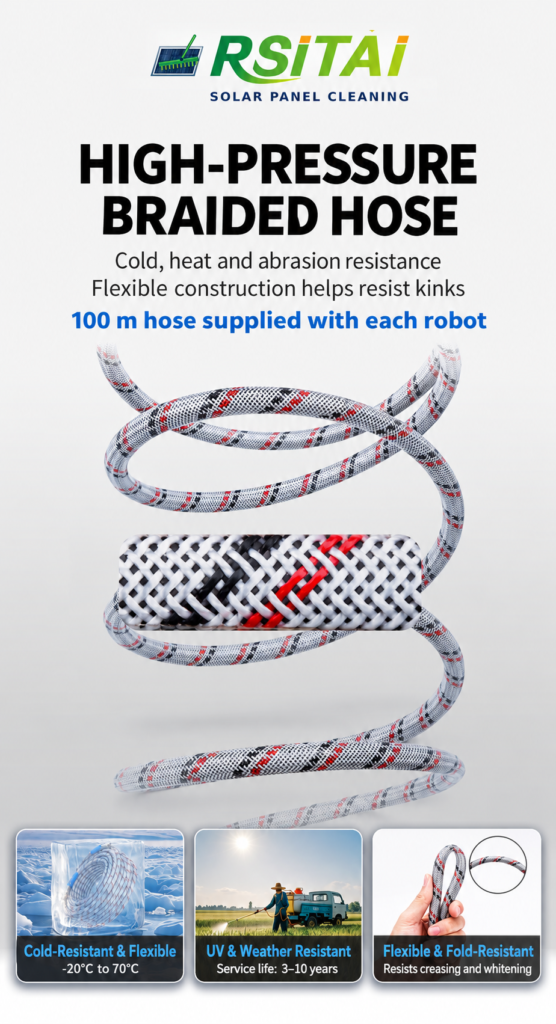
The supplied information describes dry sweeping and wet cleaning with a water pump and hose, an anti-fall assistance system and remote operation. It illustrates spare brush-head widths, battery and charger options, a controller and a 100 m hose. Confirm the exact included items, available spares and training requirements in your quotation.
Assembly and equipment testing
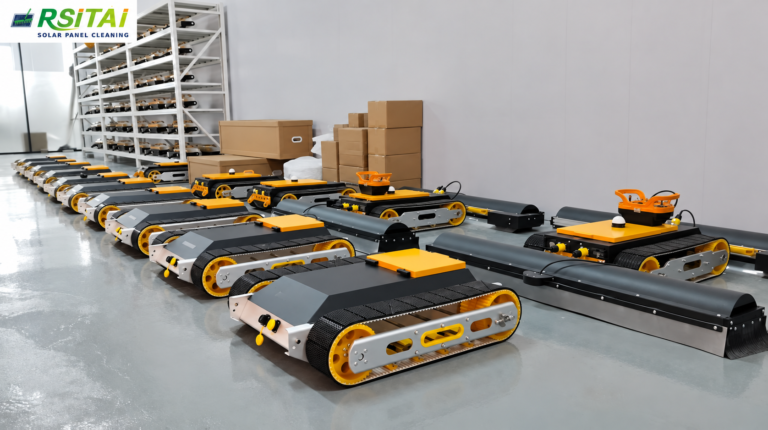
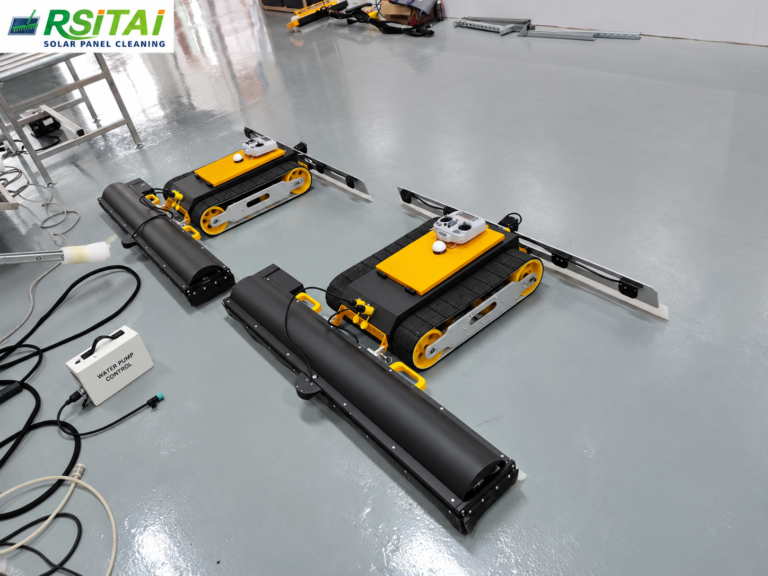
What to assess
Array geometry
Panel dimensions, row length, spacing, inclination and obstacles determine what type of robot can operate.
Operating method
Consider how operators move, power, transport and supervise the equipment on your actual site.
Support and parts
Ask for model-specific specifications, training requirements, consumables and after-sales terms before purchase.
Packaging and export preparation
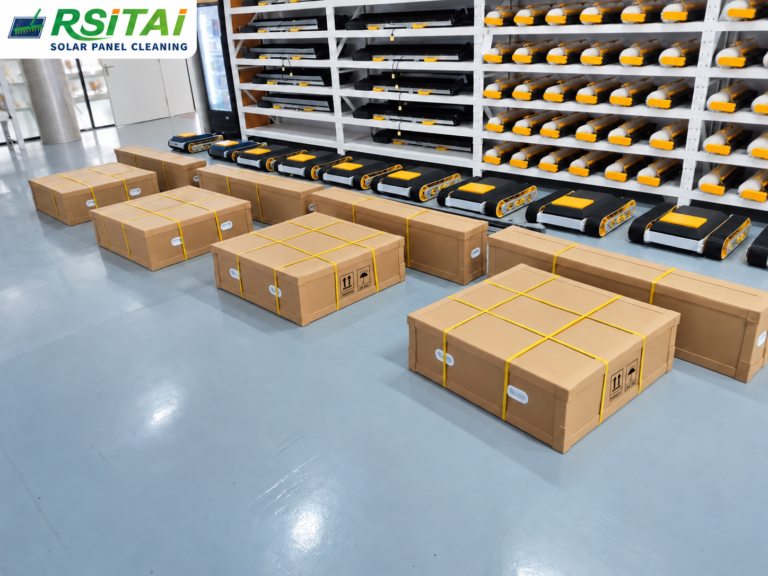
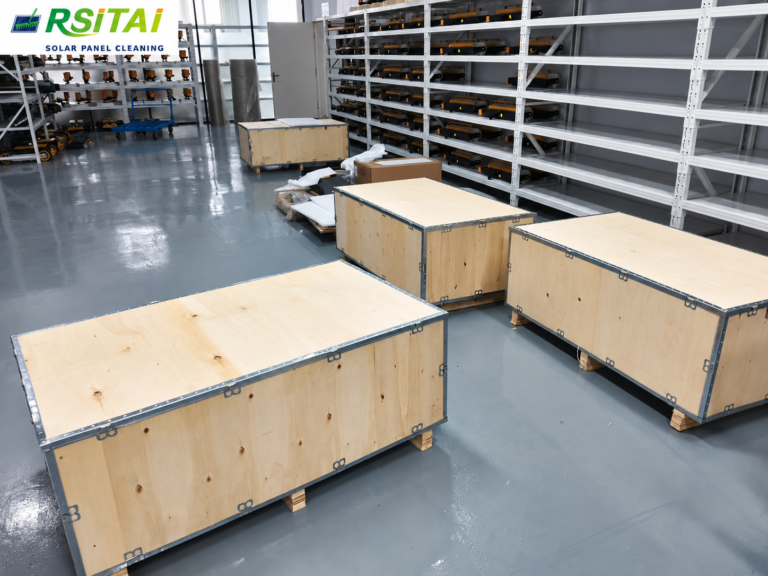
Packaging photos show cartons and wooden export crates. Confirm the packing method, dimensions and included accessories for your selected configuration in the quotation.
Two-year warranty
The complete machine is covered by a two-year warranty. Free warranty repairs are provided for faults or damage not caused by the user. Brush bristles are consumable wear parts and are excluded from the warranty.
Send us your project layout
For a useful recommendation, share site photos or a layout drawing, installed capacity, module arrangement, tilt, cleaning frequency and destination country. We can then check which available robot configuration is relevant to your project.